
"green coffee cultivation"
5000 article(s) found

Peruvian Coffee YANESHA Yanisha Cooperative introduction _ Peruvian Alpine Coffee Taste description
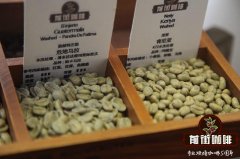
Professional coffee knowledge exchange more coffee bean information please follow the coffee workshop (Wechat official account cafe_style) PERU CEPRO YANESHA Washed G1 level: G1 Origin: Villa Rica, Oxapampa varieties: Bourbon treatment: washing altitude: 1300-1700m Flavor description: honey apples, almonds, sweet taste, excellent mellow thickness and sour

What kind of coffee beans do they belong to in plants
Coffee tree belongs to the evergreen tree of Rubiaceae. Since ancient times, most of the plants of Rubiaceae are plants with special effects, such as quinine tree, which is regarded as a specific drug for malaria, and Dugan, which is used to treat amoeba dysentery. Coffee is defined as the most unique alkaloid drinking flora.
Grade and Specification of Coffee beans Coffee Grade Classification and Coffee Grade Pyramid
Professional coffee knowledge exchange more coffee bean information please pay attention to the coffee workshop (Wechat official account cafe_style) the latest coffee raw bean knowledge collation: coffee bean grade and naming law coffee bean grade and specification at present each producing country has its own independent standard. The most commonly used criteria are as follows: a: washed / non-washed B: flat beans / round beans

Slightly sour Cuba Crystal Mountain Fine Coffee Bean Cultivation Location Climate Elevation Profile
Cubita is praised and affirmed by food families from all over the world. It is known as the unique Caribbean coffee, the special coffee beans in the island coffee beans, and the crystal mountain coffee produced in Cuba's crystal mountain, so it is called Cuban crystal mountain coffee. Crystal Mountain Coffee is synonymous with top Cuban coffee because this area produces precious minerals such as quartz and crystal in addition to coffee. crystal

How to classify coffee beans
Plant classification Coffee tree belongs to the evergreen tree of Rubiaceae. Rubiaceae plants have been dominated by plants with special effects since ancient times, such as quinine tree, which is regarded as a specific drug for malaria, and Dugan, which is used to treat Amiba dysentery. Coffee is defined as the most unique alkaloid drinking flora. Usually after sowing for two to three years, coffee trees can grow to a height of about five to ten meters, but to prevent the loss of coffee beans.

Cultivation techniques of small Coffee cultivation of Coffee beans in Yunnan Province
Disease control: 1. Coffee rust is the main disease of coffee, the most harmful, the damaged plants, light reduced yield, heavy death. Coffee rust is mainly harmful to leaves and sometimes to young fruits and twigs. After the leaves were infected, many light yellow spots appeared at first and enlarged in the form of water stains, followed by orange-yellow powdery spores on the back of the leaves, and there was a light green halo around the disease spots, and the disease spots in the later stage.

China's most suitable microclimate for coffee cultivation Introduction to coffee cultivation on the environmental needs
China's most suitable microclimate for growing coffee Introduction to the environmental needs of coffee cultivation The origin of coffee trees is Ethiopia in Africa. Coffee tree in botany, belongs to the Rubiaceae coffee subgenus evergreen tree, and generally known as coffee beans, survey is the coffee tree fruit seeds, only because the shape like beans, so called coffee beans. Climate is coffee growing

Knowledge of Coffee Variety Classification
Special classification system of coffee: 1. Subgenus Coffea: 2. Malagasy coffee subgenus: 3. Subgenus Pala Coffee: 4. Age coffee subgenus: a, red coffee group: B, thick-skinned coffee group: C, Mozambican coffee group: d, black fruit coffee group E, dwarf coffee group: red fruit coffee group: a) Arabica species: Tibica varieties: (Tp)

Special Coffee Classification system-China Special Coffee Association
Introduction to the flavor and taste of coffee bourbon species: characteristics: medium-high appearance, low fruit yield, green top leaves, excellent acidity and poor virulence. El Salvador bourbon: Kaddura Kaddura, a green-topped dwarf discovered in Brazil in 1935, has obvious waxy leaves, short internodes, clusters of fruit and 200kg higher yield than bourbon. In one fell swoop to replace Tibica and

Introduction to the characteristics of grindability of Bobang coffee beans grown in Yunnan by describing the flavor of small grains
Yunnan Coffee Bean introduces two classic high-quality coffee varieties, Typica and Bourbon, which are the main cultivated varieties in Yunnan. In 1991, Katimo Catimor series varieties were introduced from Kenya (with stronger anti-virus ability and higher yield). A variety of Arabian species (also known as small seed species). Because the morphology and habits of the two varieties are similar, the two

The variety [Caturra] Katura and its variety evolved from Arabica species
Exchange of professional baristas Please pay attention to Coffee Workshop (Wechat official account cafe_style) A single gene natural mutation of [Caturra] Katula Red Bourbon, a single gene dwarf green-top variety evolved from the Arabica species, with 50006000 plants per hectare, no shading, small beans, and higher yield than Bourbon. It was first discovered in Brazil in 1937 and in Minas Ger in Brazil in 1937.

The Classification of Coffee beans: a Sociological Analysis of the reasons for Starbucks' success
Botanical classification of coffee beans: the circular zone at the tip of the north-south regression line, which we call Coffee Zone or Coffee Belt. Because the area is rich in rich organic matter and volcanic ash soil, the average temperature is about 20 degrees, the average annual rainfall is between 1000 and 2000mm, and there is no large temperature difference during the year, so it has become an ideal place for coffee production. Growing coffee is strict.
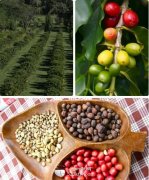
Coffee Common sense Coffee Special Classification system
Special classification system of coffee: 1. Subgenus Coffea: 2. Malagasy coffee subgenus: 3. Subgenus Pala Coffee: 4. Age coffee subgenus: a, red coffee group: B, thick-skinned coffee group: C, Mozambican coffee group: d, black fruit coffee group E, dwarf coffee group: red fruit coffee group: a) Arabica species: Tibica varieties: (Tp)
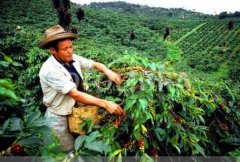
A brief introduction to the cultivation of Sidamo Shakiso boutique coffee beans, geographical location, climate and altitude
Ethiopian coffee beans grow in close to the natural environment, after years of planting under the same growth conditions, Ethiopian coffee beans have gradually adapted to the environment here. More than 60% of coffee beans are grown in forests or semi-forests. Large-scale coffee-growing villages account for about 35% of the country's total coffee production. Many of these are used.

What exactly is fresh coffee? why does good coffee emphasize "fresh roasting"?
It is often said that some of the coffee cooked beans bought online are not the latest baking dates, and they will inevitably mutter in their hearts when they feel that they can't buy the freshest coffee beans with money. Some people who may know something about coffee know that coffee is also an ingredient and needs to be kept and used freshly. Stale coffee not only tastes bad, but even produces ochre poison if it is not well preserved.

Fragrant Sidamo Shakiso boutique coffee beans cultivation geographical location climate altitude brief introduction
On 8 December 1994, the Ethiopian Constituent Assembly adopted the fourth Constitution, the Constitution of the Federal Democratic Republic of Ethiopia, which entered into force on 22 August of the following year. The new constitution consists of 11 chapters and 106 articles, which stipulates that Ethiopia is a federal state with a separation of powers and a parliamentary system. The president is the head of state for a term of six years. The prime minister and the cabinet have the supreme executive power, and the cabinet is jointly formed by the majority party or political alliance.
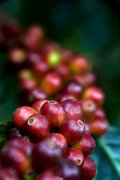
Explain the knowledge of coffee beans for you.
Small and round dark brown coffee beans, quietly emitting a fragrant fragrance in the grinder, injected into the cup showing the beautiful color of amber, these are the three very deep impressions of coffee.

Honey cream-flavored Rosa boutique coffee beans cultivation geographical location climate altitude brief introduction
Rose coffee raw beans have a very beautiful turquoise, jade-like warm texture, smell of fresh grass, peach, berry and oolong tea that most coffee beans do not have, tropical fruit, strong sweetness; these are the feelings that Rose Summer has always given us. Properly baked, they make us feel like we're sipping a bunch.

El Salvador Hot Spring Coffee Manor-Borha Manor Green Owl Natural Hot Spring Water washing treatment
For the exchange of professional baristas, please follow the coffee workshop (Wechat official account cafe_style). The raw coffee beans of Borja Manor in El Salvador are mainly bourbon, and in recent years there have been attempts to develop other varieties such as ABM or SAMPACHO. The regional branch of planting is in the town of Apaneca Apaneca and San Salvador volcano Volcano of San Salvador, and in this
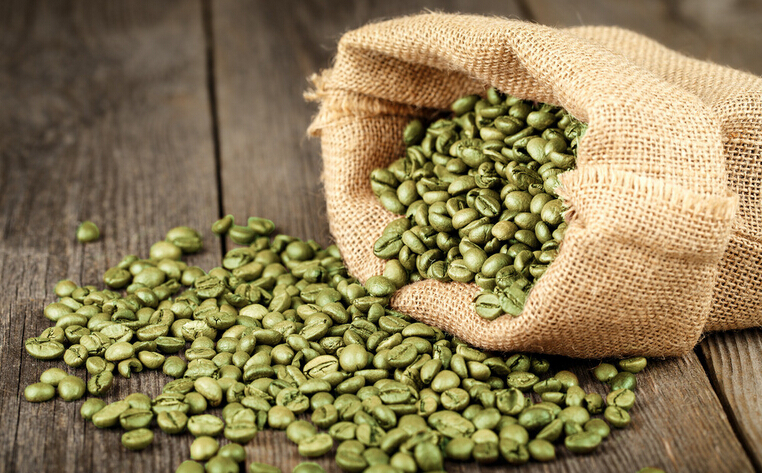
The classification of coffee beans. Classification of raw beans.
Plant classification Coffee tree belongs to the evergreen tree of Rubiaceae. Rubiaceae plants have been dominated by plants with special effects since ancient times, such as quinine tree, which is regarded as a specific drug for malaria, and Dugan, which is used to treat Amiba dysentery. Coffee is defined as the most unique alkaloid drinking flora. The fruit of coffee is made up of outer skin, pulp, endocarp, silver skin, and the species wrapped in the innermost layers mentioned above.